Easy Girl Drawing Guide: From Basic Sketches to Detailed Art
Introduction

This latest update (2025) helps beginners fix common drawing hiccups fast. The approach is scalable, so it grows with skill, from doodles to full portraits. It is browser-friendly too, easy to skim on mobile. For quick reference, save this guide and revisit whenever progress stalls. If deciding where to start, browse the basics here first, then level up step by step. For a compact overview of how to draw a girl easy, this guide keeps things practical.
Introduction to Easy Girl Drawings
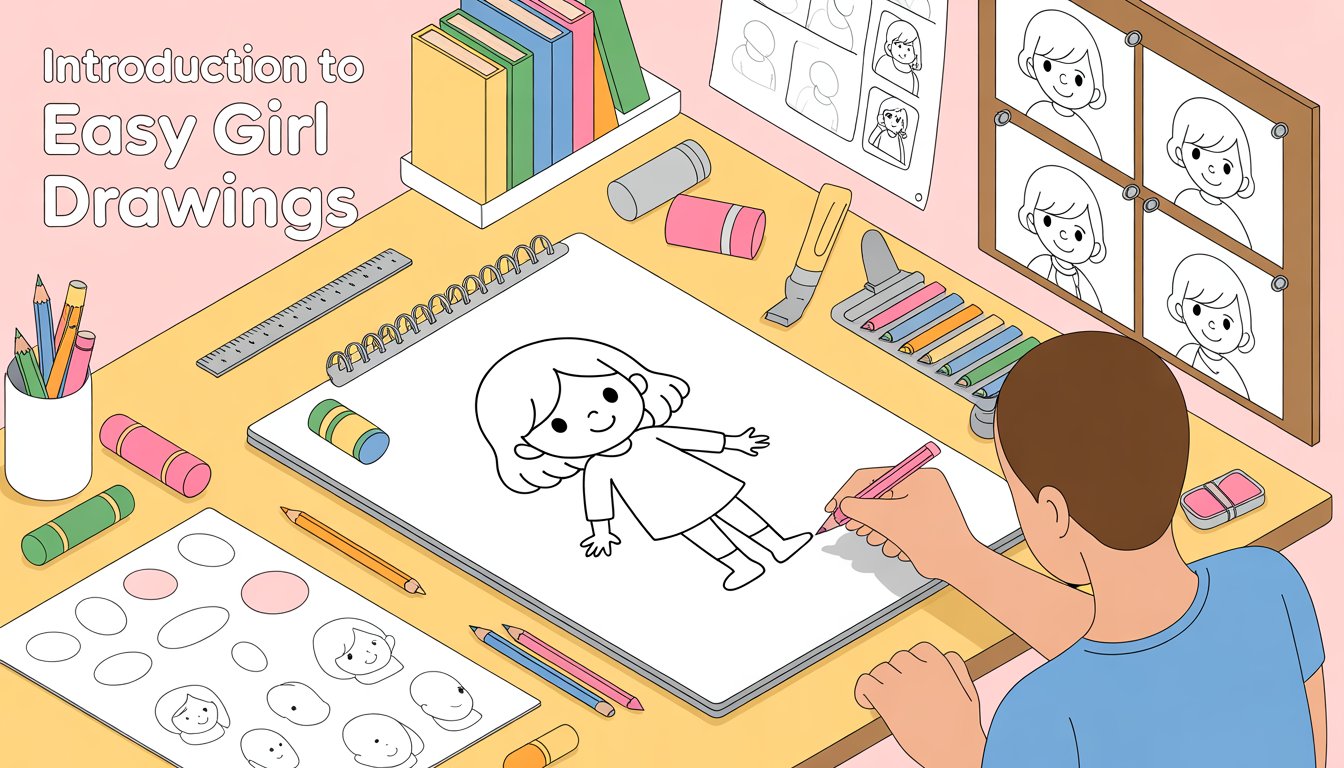
Starting with easy girl drawings involves mastering fundamental techniques that build a strong foundation for beginners. By focusing on simple shapes and essential tools, you can create consistent and appealing artwork that improves over time. This section explores the basics, including tools, shapes, and pitfalls to avoid, ensuring your drawings are both enjoyable and effective.
Basic tools and materials needed
To begin drawing a girl easily, gather some basic tools that make the process smoother and more forgiving for beginners. Start with a smooth HB pencil for initial light sketching, which allows for easy corrections, and a 2B pencil for adding soft shading to bring depth to your work. Opt for heavier sketch paper if possible, as it erases cleaner and reduces smudges, though affordable options work well when you’re just starting out. Don’t forget a soft kneaded eraser for gentle corrections and creating highlights, along with a small ruler to help maintain symmetry and straight guidelines in your drawings. For those looking to enhance their shading, a blending stump can be a useful optional addition to smoothly blend areas like hair or skin textures.
Simple shapes for beginners
When learning how to draw a girl easy, beginning with simple shapes helps demystify the process and builds confidence quickly. Start by blocking in the head with an oval shape rather than a perfect circle, as this provides a more natural foundation for facial features. Add a vertical center line to divide the face symmetrically and a horizontal eye line to position the eyes correctly, ensuring balanced proportions from the outset. For the body, use a bean shape for the torso and straight sticks for the limbs, which allows you to establish overall posture before adding details. This method not only simplifies complex forms but also makes it easier to adjust and refine as you progress in your drawing skills.
Common mistakes to avoid
Avoiding common mistakes is crucial when figuring out how to draw a girl easy, as small errors can derail your entire sketch if not addressed early. One frequent issue is pressing too hard with your pencil at the beginning, which makes erasing difficult and leaves unwanted marks on the paper. Another pitfall is placing the eyes too high on the head; remember to keep them at the midline to maintain realistic proportions. Additionally, resist the urge to jump into detailed elements like hair before establishing stable facial landmarks, as this can lead to inconsistencies that are hard to fix later. By being mindful of these errors, you’ll create cleaner, more professional-looking drawings right from the start.
Step-by-Step Drawing Tutorials
Diving into step-by-step drawing tutorials provides a structured way to learn how to draw a girl easy, progressing from basic outlines to refined details. This methodical approach ensures that corrections remain straightforward and helps build skills that apply to various styles. Whether you’re creating quick sketches or detailed portraits, these steps promote consistency and confidence in your artwork.
How to draw a girl’s face
Mastering how to draw a girl’s face starts with establishing key guidelines to ensure accurate proportions and features. Begin by placing the eye line halfway down the head oval, then position the nose halfway between the eyes and the chin for a balanced look. The mouth should sit about a third of the way below the nose, with its corners aligning under the pupils to create natural expressions. Start sketching eyelids as simple curved lines before adding refined details like lashes, keeping everything light and adjustable. This foundational technique allows beginners to build realistic faces that can be customized with different styles and emotions.
Sketching body proportions
Sketching body proportions correctly is essential for creating lifelike and balanced easy girl drawings. Aim for a height of seven to seven-and-a-half heads tall to achieve a natural appearance, which serves as a reliable guideline for beginners. Align the shoulders at about two head widths, adjusting based on the desired style, and ensure the hips and shoulders are balanced with a gentle S-curve along the spine for fluidity. This approach helps in capturing dynamic poses and prevents common distortions that can make figures look awkward. Practicing these proportions regularly will make your full-body sketches more intuitive and professional over time.
Adding details like hair and clothes
Adding details such as hair and clothes brings your easy girl drawing to life, transforming basic shapes into a complete character. Group hair into large, flowing shapes before detailing individual strands to maintain proper volume and movement. For clothes, indicate fabric folds at points where the body bends or compresses, which adds realism and depth to the figure. Incorporate accessories last, ensuring clean overlaps to enhance the sense of dimension and completeness. This layered method ensures that details enhance rather than overwhelm the overall structure of your drawing.
Related Interests and Inspirations
Exploring related interests and inspirations can significantly boost your motivation and skill in drawing girls easily. By building a collection of references and ideas, you’ll find endless ways to spark creativity and overcome creative blocks. This section delves into sketches, doodles, specific features, and reference ideas to keep your practice engaging and progressive.
Sketches and drawings
Incorporating sketches and drawings into your routine helps loosen up your style and improve observation skills. Start with two-minute warm-up sketches to focus on fluid lines and basic forms without overthinking. Then, move to five-minute studies that capture light and shadow, allowing you to experiment with contrast and depth. Prioritizing the silhouette first enables quick proportion checks and adjustments. Regularly practicing these exercises will refine your technique and make complex drawings feel more approachable.
Easy doodles and drawings
Easy doodles and drawings serve as a fun, low-pressure way to explore elements like hairstyles, outfits, and poses in your girl drawings. Keep your shapes chunky and easily readable to maintain clarity even in quick sketches. Fill a page with multiple variations to discover which styles resonate with you most. This playful approach encourages creativity and helps build a personal library of ideas for future projects. Over time, these doodles can evolve into more polished pieces as your confidence grows.
Drawing specific features like the nose
Drawing specific features like the nose requires attention to subtle shapes and shadows for a realistic effect in easy girl drawings. Begin by simplifying the nose as a wedge or a basic ball with wings to establish its form without complexity. Emphasize the shadow beneath the tip instead of heavy outlines to create a softer, more natural appearance. Keep the bridge lines faint to blend seamlessly with the rest of the face, especially in gentle or stylized portraits. Practicing this feature in isolation will improve your overall facial drawings and add expressiveness to your characters.
Best saved ideas for reference
Building a collection of the best saved ideas for reference ensures you always have inspiration at hand for your drawing sessions. Include side profiles, studies of hair volume, and grids of various eye shapes to cover essential elements. Maintain three to five go-to poses that you can practice quickly and repeatedly. Rotate your references weekly to introduce fresh perspectives and prevent creative ruts. This organized approach will make your practice more efficient and help track your improvement over time.
Explore Related Boards and Resources
Utilizing related boards and resources expands your access to visual ideas and expert advice for improving how to draw a girl easy. From online platforms to community interactions, these tools offer diverse perspectives and quick solutions. This section covers Pinterest boards, tutorials, and forums to enhance your learning experience.
Pinterest boards for drawing ideas
Pinterest boards are excellent for gathering drawing ideas, providing a visual feast of styles and concepts. Search for boards with clear thumbnails and a mix of poses, expressions, and outfits to diversify your inspiration. Favor those that organize content logically, making it easy to find specific references quickly. Update your saves monthly to keep your collection current and exciting. This habit ensures a steady stream of fresh ideas to incorporate into your easy girl drawings.
Online tutorials and videos
Online tutorials and videos offer step-by-step guidance that’s perfect for troubleshooting specific challenges in drawing. Choose short videos that allow you to pause at key structure stages and compare them directly to your own sketches. Note important timestamps for sections you revisit often, creating a personalized practice routine. These resources are browser-friendly and scalable, fitting seamlessly into busy schedules. Engaging with them regularly will accelerate your learning and refine your techniques effectively.
Community forums for feedback
Community forums provide valuable feedback from fellow artists, helping you identify and fix issues in your drawings. Share work-in-progress images and request specific, actionable critiques, such as adjustments to eye placement or jaw angles. Always thank contributors and follow up with revised versions to show progress and build relationships. This interactive approach fosters growth and motivation in a supportive environment. Over time, participating in forums will sharpen your self-editing skills and expand your artistic network.
Tips for Improvement and Practice
Implementing tips for improvement and practice is key to advancing your skills in easy girl drawings. Consistent, targeted efforts combined with inspiration from others can lead to noticeable progress. This section offers routines, style experiments, and artist analyses to guide your development.
Daily practice routines
Establishing daily practice routines builds momentum and hones your drawing abilities over time. Begin with five-minute head constructions to warm up, followed by a longer study to delve deeper into details. Conclude each session with a fun, pressure-free sketch to boost confidence and enjoyment. Log your practice dates and topics to visually track your progress and identify areas for focus. This structured yet flexible approach ensures steady improvement without overwhelming your schedule.
Experimenting with styles
Experimenting with styles keeps your drawing practice dynamic and helps discover your unique voice. Alternate between realistic, semi-realistic, and stylized proportions to understand their impacts on the final image. Test different line weights, from thick and bold to thin and delicate, to convey various moods and emphases. Evaluate what works best when viewed at arm’s length or on a screen for practicality. This exploration encourages versatility and prevents your work from becoming stagnant.
Seeking inspiration from artists
Seeking inspiration from established artists can elevate your own easy girl drawings by revealing effective techniques. Analyze how they handle hair masses, grouping strands into cohesive shapes for volume. Observe their simplifications of features like noses and eyelids, adapting these to fit your style. Focus on borrowing processes rather than copying lines directly to foster originality. Regularly studying diverse artists will broaden your skills and inspire innovative approaches in your work.
Frequently Asked Questions
Addressing frequently asked questions helps clarify common concerns and keeps your drawing progress on track. These quick answers serve as handy checkpoints for when something feels off in your artwork. Refer to them as needed to troubleshoot and refine your techniques.
What pencil grade is best to start with?
Begin with HB for construction because it erases cleanly. Add 2B for gentle shading once the structure is correct. Softer grades can come later for deeper tones. This progression ensures your drawings remain adjustable and build depth gradually.
How do I keep proportions right without fancy tools?
Use a light center line and eye line, then measure by eye-widths. Compare left and right shapes for symmetry during each step. Step back or zoom out to catch distortions. Practicing this method regularly will make accurate proportions second nature.
Can this method scale to full-body drawings?
Yes, the same block-in approach simply extends downward. Replace the bean torso with ribcage and pelvis forms. Keep the workflow: big shapes first, details last. This scalability makes it versatile for various drawing projects.